
Edinburgh · the Forth · Fife
The Road North
From Castlehill, below Edinburgh Castle, down to the Firth of Forth, the wide sea inlet north of the city; across the water at the Queen’s Ferry; and on to Dunfermline in Fife. Every place on this road is real, and the witch trials touched many of them.
I · The Old Town
Castlehill to the Lawnmarket
The top of the Royal Mile, the Old Town’s main street, and the closes around it. Most of these places you can still visit.
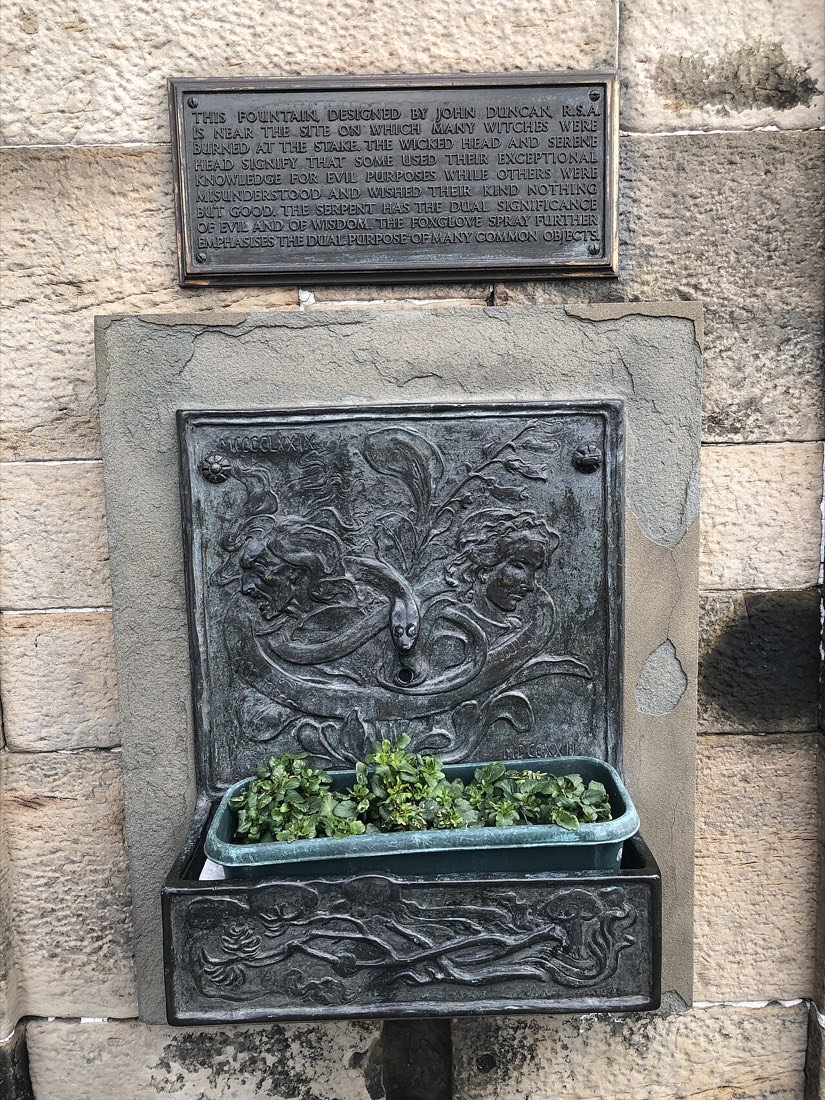
The Witches’ Well, Castlehill
A drinking fountain designed by John Duncan in 1894 stands near the place on Castlehill where many people accused of witchcraft were put to death.1
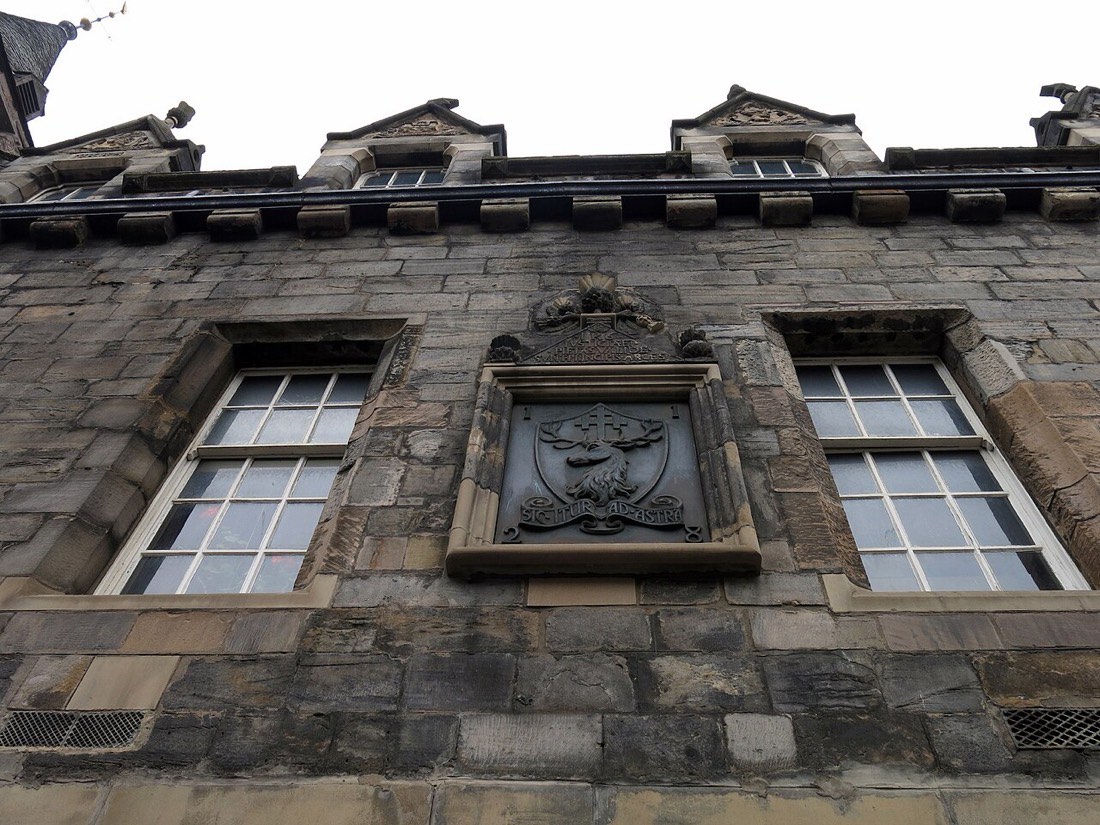
The Canongate Tolbooth
Built in 1591, while the North Berwick trials were still under way. The Canongate, at the foot of the Royal Mile, was then a separate burgh with its own council, and this was its town hall, court and jail.2

Advocate’s Close, High Street
One of the steep alleys, called closes, that drop away from the High Street. Old Town life was crammed into closes and wynds (narrow lanes) like this one.

A lantern of the time
Made of iron around 1605, with a candle behind thin panes of horn. Tradition says Guy Fawkes carried this very one when he plotted to blow up Parliament, and King James with it. It now sits in the Ashmolean Museum in Oxford.
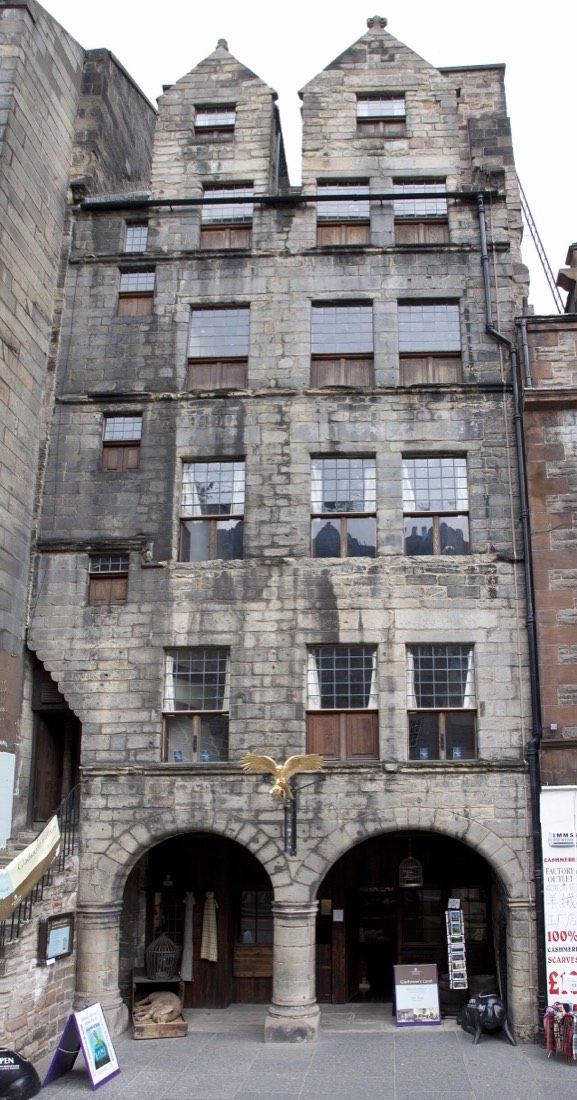
Gladstone’s Land, Lawnmarket
The merchant Thomas Gledstanes bought this tenement, a tall building of flats, in 1617 and rebuilt it, storey upon storey, above the street.3
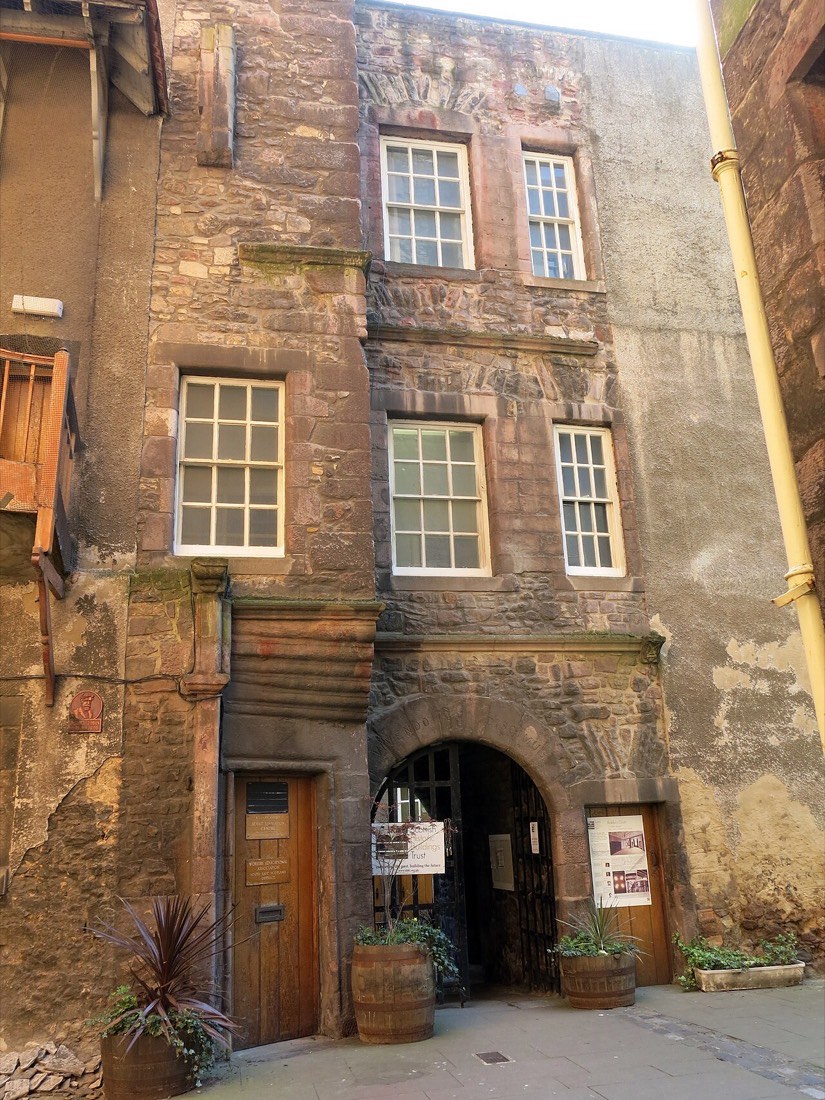
Riddle’s Court, Lawnmarket
This was the house of John MacMorran, a bailie, one of the town’s magistrates. He was shot dead in September 1595 during a schoolboys’ revolt at the High School. In 1598 the King and Queen dined here.4
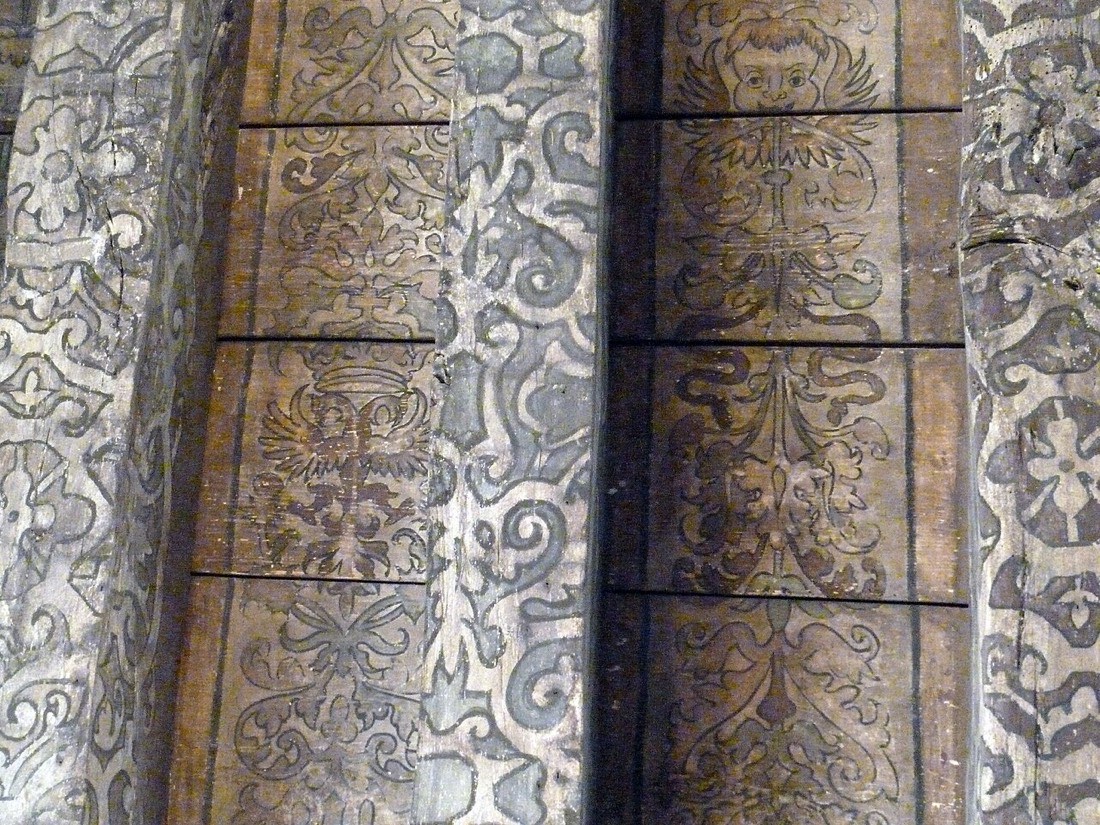
A painted ceiling
Inside the same house: beams decorated in the 1590s.
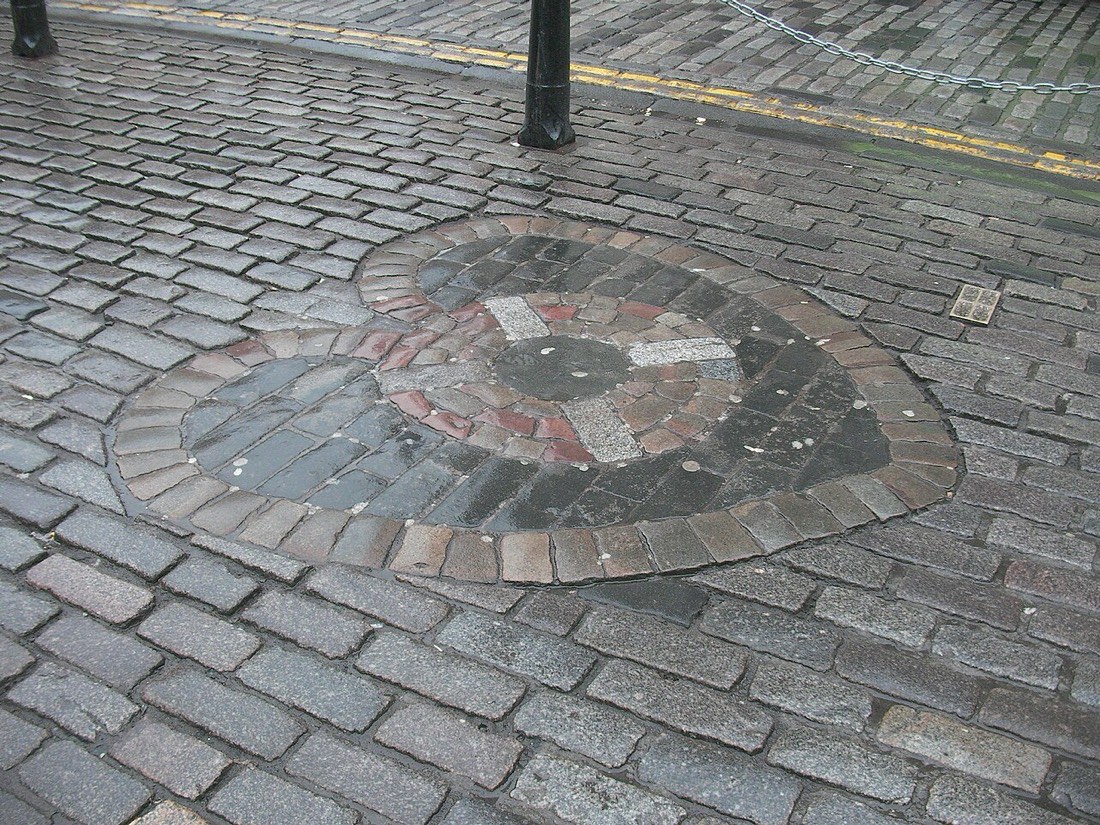

The Old Tolbooth and the Heart of Midlothian
The Tolbooth, beside St Giles’, Edinburgh’s High Kirk, was the town’s jail and the seat of its council. It was pulled down in 1817. A heart in the cobbles of the High Street now marks its door.
Was anyone ducked in the Nor’ Loch, the loch below the castle? Not as a witch test. On 22 May 1562 the town council ordered a ducking place with a pulley to punish fornicators, couples caught together outside marriage. There is no known record of accused witches being ducked or drowned there. The loch was later drained; Princes Street Gardens fill its bed today.5
II · Crossing the Forth
The Queen’s Ferry
To reach Dunfermline from Edinburgh, you crossed the Firth of Forth. For nearly nine hundred years, the way across bore a queen’s name.
Queen Margaret, wife of King Malcolm III, set up a free crossing here for pilgrims on their way to the shrine of Scotland’s patron saint at St Andrews, in Fife. North and South Queensferry both still carry her name.67
Ferries crossed here, on and off, from Margaret’s day until the Forth Road Bridge opened in 1964.6
Further east, Pettycur by Kinghorn was for centuries the Fife landing for boats from Leith, Edinburgh’s port.8

The Forth at the Queen’s Ferry
An eighteenth-century view by Francis Jukes.
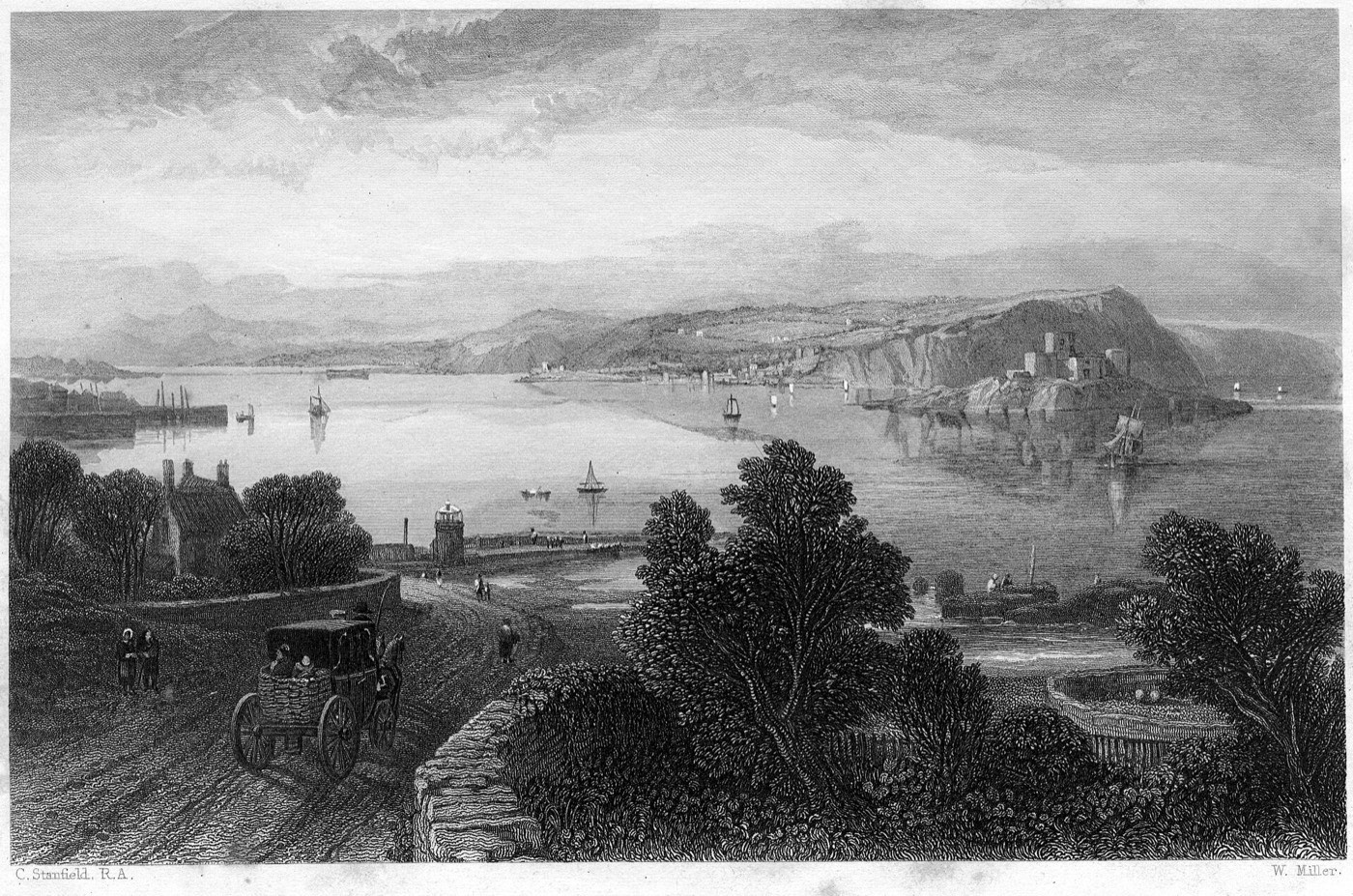
The Queensferry, 1843
An engraving after Clarkson Stanfield, looking across the water from the south-east.

Malcolm and Margaret
William Hole imagined the royal couple at Queensferry in a mural of around 1899, some eight centuries later.
III · Dunfermline
The old royal town
Across the water lay Dunfermline, a royal burgh, or chartered town, with a palace, an abbey and witch trials of its own.
Dunfermline Palace became the home of James VI’s queen, Anna of Denmark. Their son, the future Charles I, king of Scotland and England, was born there in 1600.9

Dunfermline Abbey, 1693
The abbey and the town, engraved by John Slezer.
Burned at Dunfermline, 1643
- Grissel Morris
- Margaret Brand
- Katherine Elder
- Agnes Kirk
- Margaret Donaldson
- Isobel Millar
Two more women, Jonet Fentoun and Isobel Marr, died in the town’s prison that same summer.10
Nineteenth-century writers place the burnings on a knowe, a small rise, beside the Witch Loan, a lane on the east side of the town.10
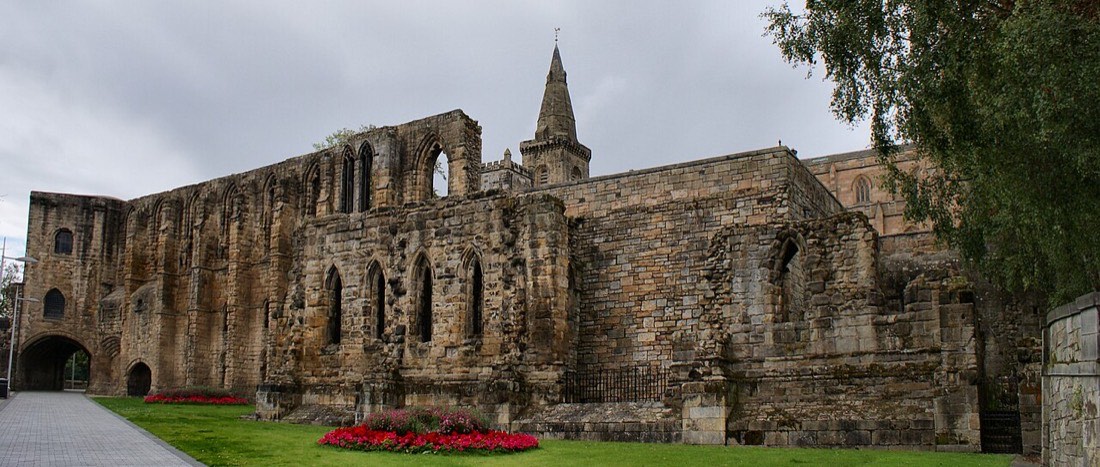
Dunfermline Palace
The ruins today, above the glen.9
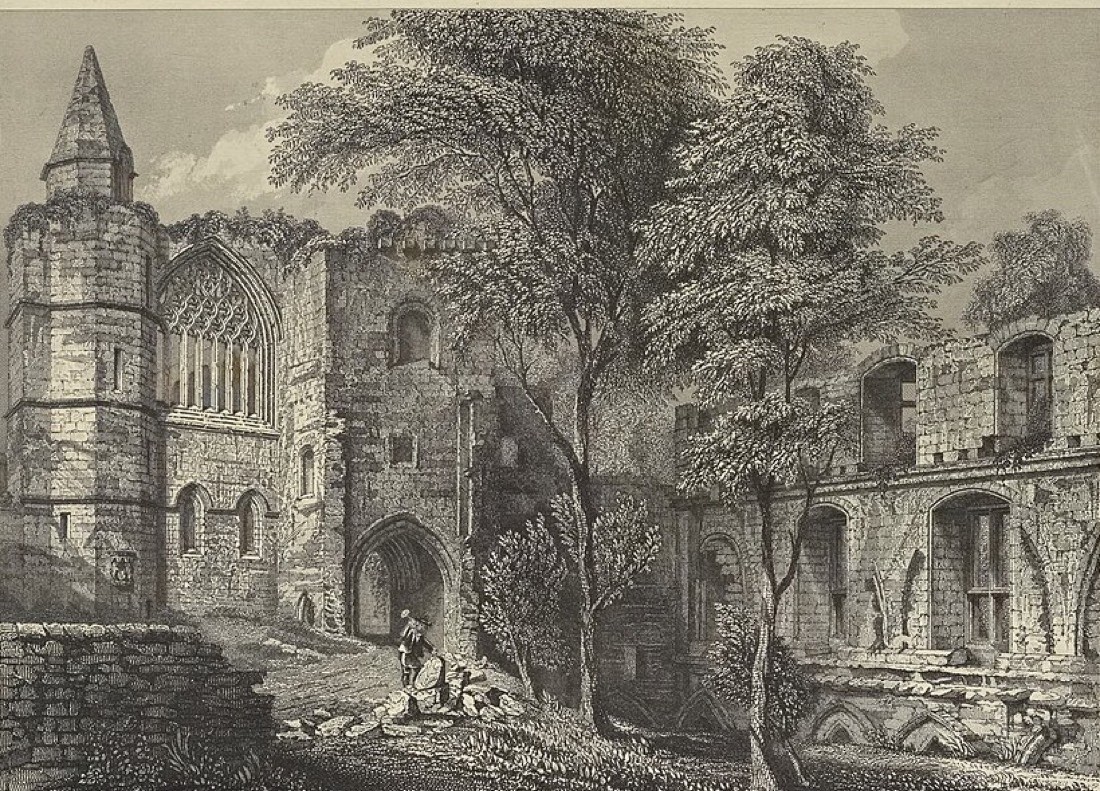
The palace in 1852
The same ruins, as R. W. Billings drew them.
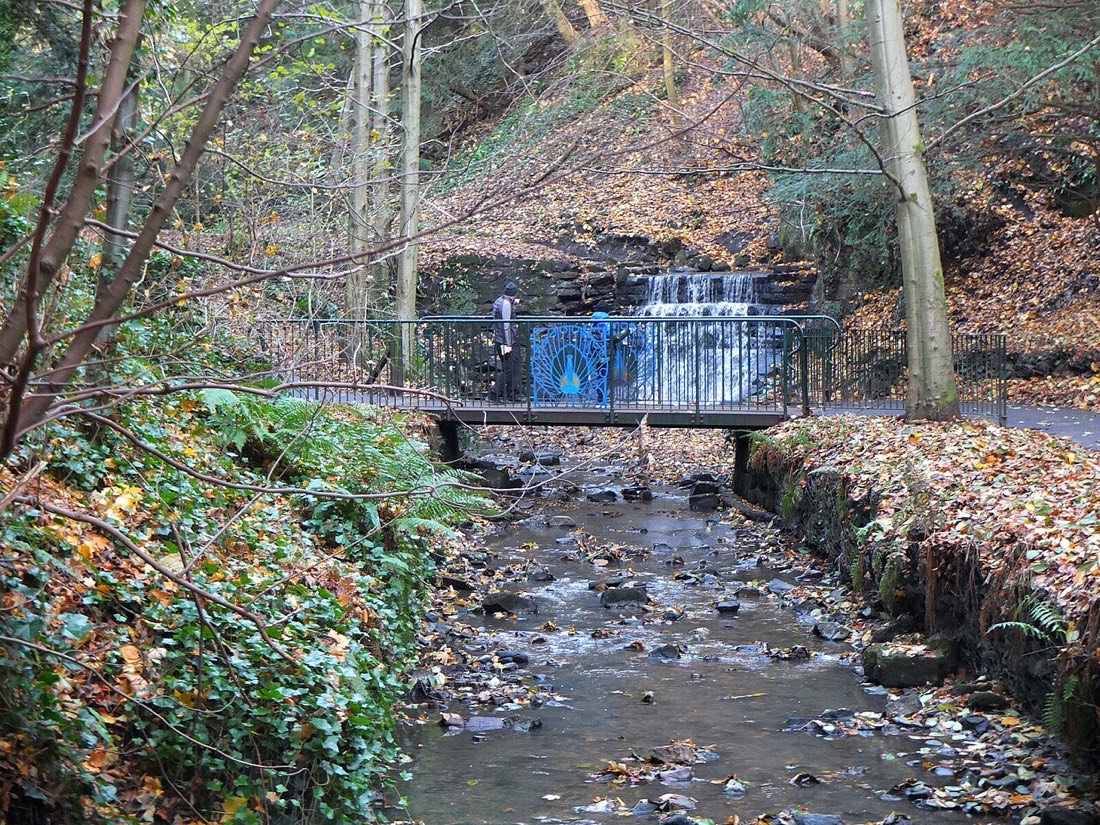
Pittencrieff Glen
The wooded glen below the palace. Andrew Carnegie, the Dunfermline-born steel millionaire, gave the park and glen to his home town in 1903.12

West Fife in 1654
From the Dutch mapmaker Joan Blaeu’s atlas of Scotland. Dunfermline sits just north of the Forth.
IV · Hospital Hill
South of the town
A quiet hill, a lost hospital and a buried well.
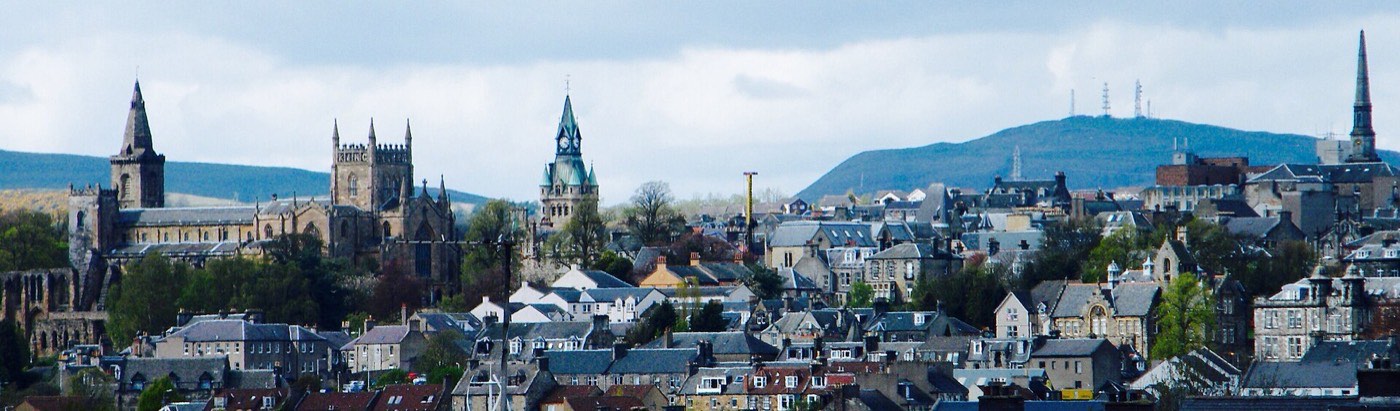
Dunfermline from Hospital Hill
Looking north-west over the town to the abbey.
V · Torryburn
The woman under the stone
West along the Fife shore lies Torryburn, and the story of the vanished skull that ends our first film.
Lilias Adie of Torryburn was held for more than a month in 1704 and questioned by the parish minister. She ‘confessed’ to meeting the Devil in a cornfield at sunset, but refused to name anyone else.15
She died in custody before she could be tried, and was buried between the tide marks under a heavy stone slab, perhaps to stop her rising again.1516
Her grave was opened in 1852 and her skull taken. By 1875 it was in a Dunfermline collector’s museum. It was last recorded in 1938, at the Empire Exhibition in Glasgow, and is now lost.15
In 2014 the historian Louise Yeoman and the Fife Council archaeologist Douglas Speirs found her grave again.16
In 2017 Dr Christopher Rynn of the University of Dundee rebuilt her face from photographs of the skull taken in 1904. ‘I saw no reason to pull the face into an unpleasant or mean expression,’ he said.17
From the Old Town · on YouTube
The Witches Who Wrecked a Queen’s Voyage
The true story of the North Berwick witch trials, in seven minutes. More films are on the way.
Walk it yourself.
Take the road north with you: a free walking map of the witch-trial sites, and first word when Book One is ready. About one letter a month.
One step left. Open the email from Jordan P. Vasconcellos and press the button inside. Your map is waiting behind it.
Nothing there? Check your junk folder.
By joining you agree to the privacy notice. Leave whenever you like.

Sources and credits
How this site tells history from story
- From the records what the documents say, with a numbered source.
- What historians think interpretation by named historians.
- Folklore belief and tradition, not evidence.
- From the novel the story, always in gold and kept apart.
Sources
- Canmore, Edinburgh, Castlehill, Witches’ Well (site 74033). Link
- Historic Environment Scotland, listing LB27582: Canongate Tolbooth.
- National Trust for Scotland, Gladstone’s Land; Apted, The Painted Ceilings of Scotland (1966).
- Robert Chambers, Domestic Annals of Scotland, vol. I (1858; Project Gutenberg text of the 1859 edition), Project Gutenberg. Link
- J. D. Marwick (ed.), Extracts from the Records of the Burgh of Edinburgh, 1557–1571 (1875), p. 135.
- Historic Environment Scotland blog, Samuel Wilson, ‘6 things you might not know about St Margaret’, 6 March 2019. Link
- Turgot, Life of St Margaret, Queen of Scotland (c.1100–07), translated by W. Forbes-Leith (1884).
- Gazetteer for Scotland, ‘Pettycur’. Link
- Historic Environment Scotland, Dunfermline Abbey and Palace: history. Link
- Ebenezer Henderson, The Annals of Dunfermline (1879), p. 309, citing the town’s Register of Deaths. Link
- Survey of Scottish Witchcraft, case of Agnes Kirk (C/EGD/2308). Link
- Historic Environment Scotland, Inventory of Gardens and Designed Landscapes: Pittencrieff Park (GDL00315).
- Ordnance Survey Name Books, Fife and Kinross-shire, 1853–55, vol. 73, p. 17 and vol. 124, p. 9 (ScotlandsPlaces). Link
- The Northern Antiquarian, ‘St Leonard’s Well, Dunfermline’ (2021), citing Beveridge (1917). Link
- J. Webster, Rare and Curious Tracts on Witchcraft (Edinburgh, 1820), which prints the 1704 examinations; summarised in ‘Lilias Adie’, Wikipedia, citing J. Webster, Rare and Curious Tracts (1820) and nineteenth-century newspaper reports. Link
- Louise Yeoman, ‘How to bury a witch’, BBC News, 2014. Link
- University of Dundee news, ‘Face of 313-year-old witch reconstructed’, 31 October 2017. Link
Pictures
- Dunfermline Abbey, from Theatrum Scotiae (1693) · John Slezer · Public domain
- Dunfermline from Hospital Hill · Photo: Geordie Slack · CC BY 3.0
- The Queensferry, from the south-east (1843) · Engraved by William Miller after Clarkson Stanfield · Public domain
- View of the Forth, including the Queen’s Ferry · Francis Jukes · Yale Center for British Art · CC0
- The West Part of Fife, from Blaeu’s Atlas of Scotland (1654) · Joan Blaeu · National Library of Scotland · Public domain
- Malcolm and Margaret at Queensferry, mural, c.1899 · William Hole · Scottish National Portrait Gallery · Photo: Kim Traynor · CC BY-SA 3.0
- The Witches’ Well, Castlehill · Photo: Lila · CC BY-SA 4.0
- The Heart of Midlothian · Photo: Delta-NC · Public domain
- The Old Tolbooth with St Giles’ · After Daniel Wilson · Wellcome Collection · CC BY 4.0
- The Canongate Tolbooth · Photo: Enric · CC BY-SA 4.0
- Advocate’s Close · Photo: Kirsty S. Ross · CC BY 4.0
- Lantern, about 1605 · Ashmolean Museum · Photo: Geni · CC BY-SA 4.0
- Gladstone’s Land, Lawnmarket · Photo: Tony Hisgett · CC BY 2.0
- Riddle’s Court, Lawnmarket · Photo: Enric · CC BY-SA 4.0
- Painted ceiling, Riddle’s Court · Photo: Margaret Ferguson Burns · CC BY-SA 3.0
- Dunfermline Palace · Photo: Chiswick Chap · CC BY-SA 3.0
- Dunfermline Palace (1852), cropped · R. W. Billings · No known copyright restrictions
- Waterfall and bridge, Pittencrieff Glen · Photo: Jim Barton · CC BY-SA 2.0


